The Original
Classic Dubai Chocolate Bar
The bar that started it all. A thick shell of tempered dark chocolate encases buttery-toasted kataifi pastry ribbons and velvety pistachio cream with a touch of tahini. Crunchy, creamy, intensely chocolatey — and surprisingly achievable at home.
- Chocolate Shell
- 350g
- 150g
- Kataifi Filling
- 200g
- 40g
- 280g
- 30g
- pinch
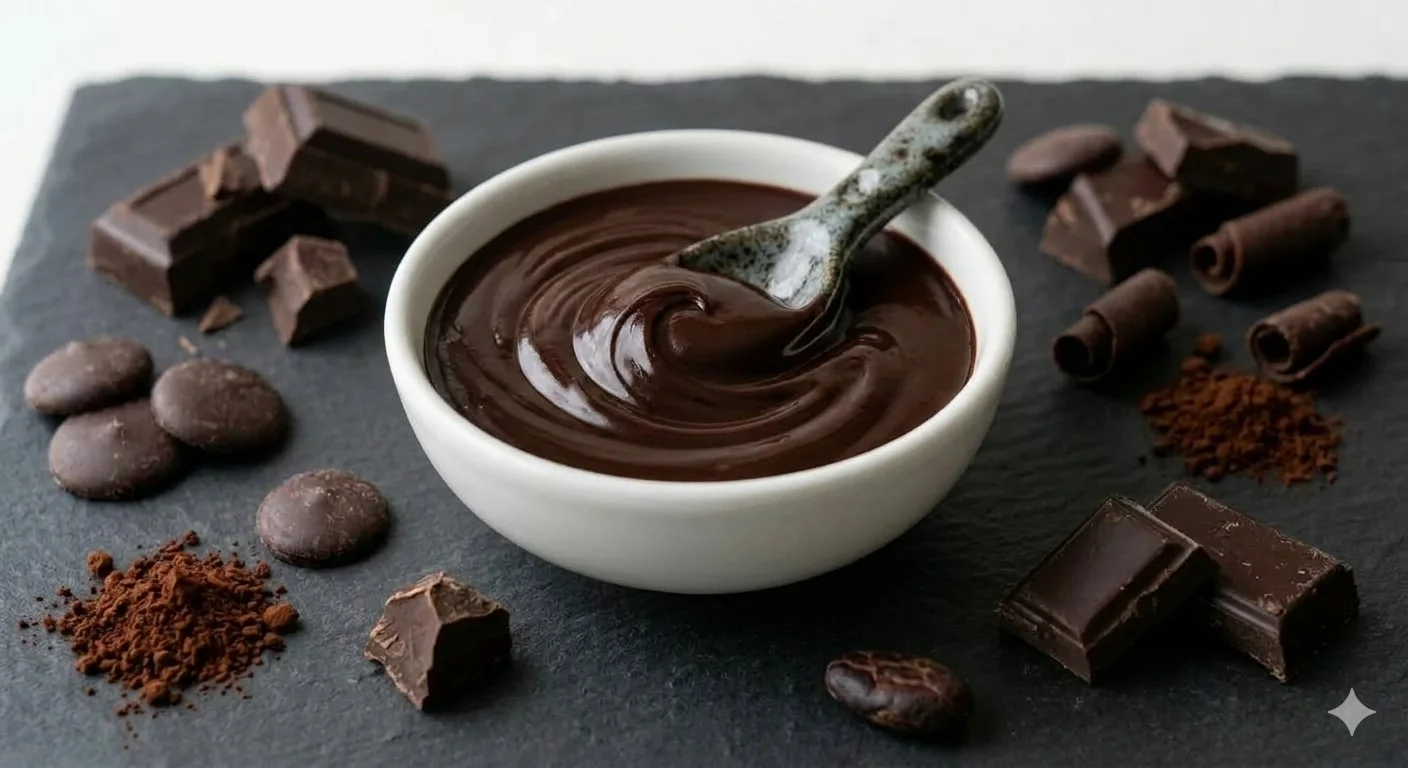
- Melt the chocolate. Place chopped dark and milk chocolate in a heatproof bowl. Melt over a pot of barely simmering water (double boiler), stirring gently, until completely smooth. Do not let any water touch the chocolate. Alternatively, microwave in 30-second bursts, stirring between each. 💡 Keep the temperature below 50°C / 122°F to avoid seizing.
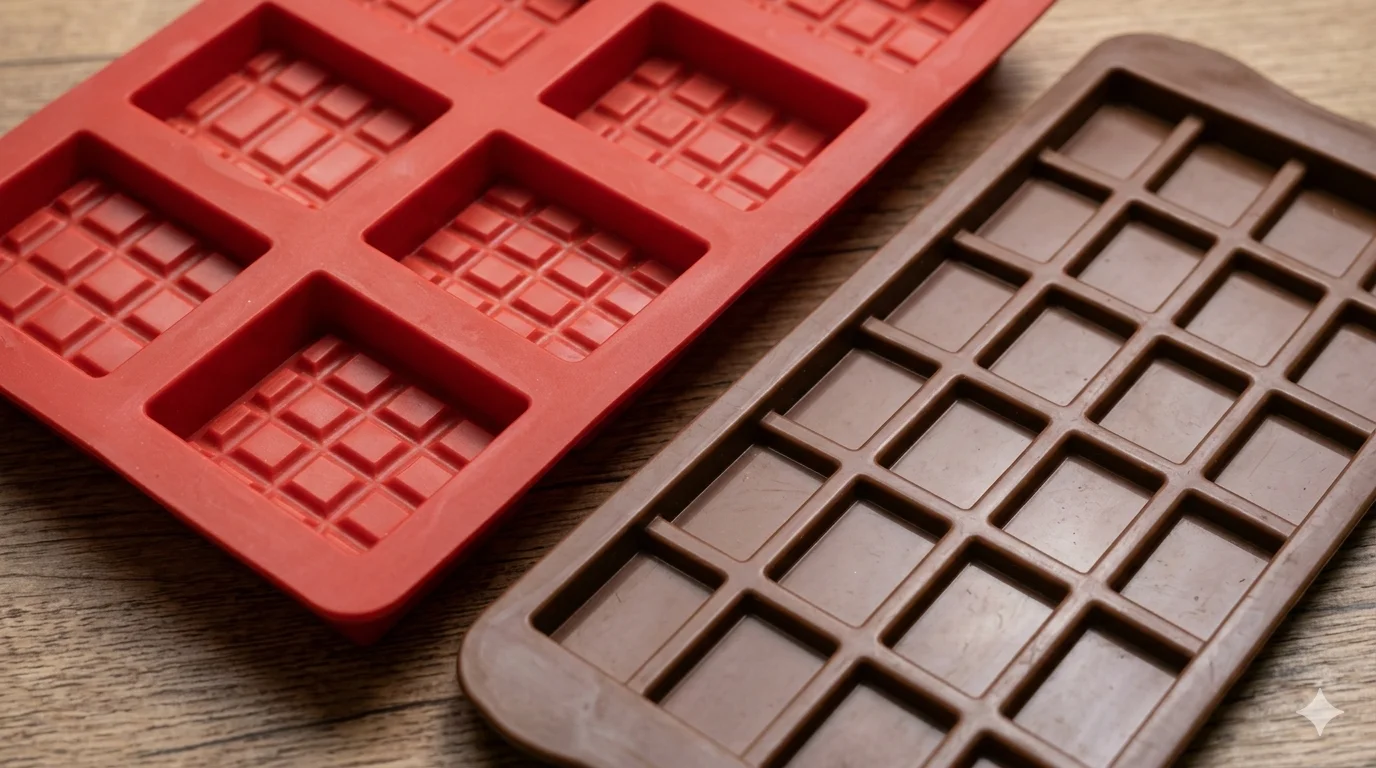
- Shell the molds. Pour ⅔ of the melted chocolate into silicone bar molds (or a parchment-lined 20×30cm tray). Tilt and rotate to coat the base and sides evenly to a 3–4mm thickness. Tap the mold firmly on the counter 5–6 times to release air bubbles. Refrigerate for 12–15 minutes until fully set and opaque.
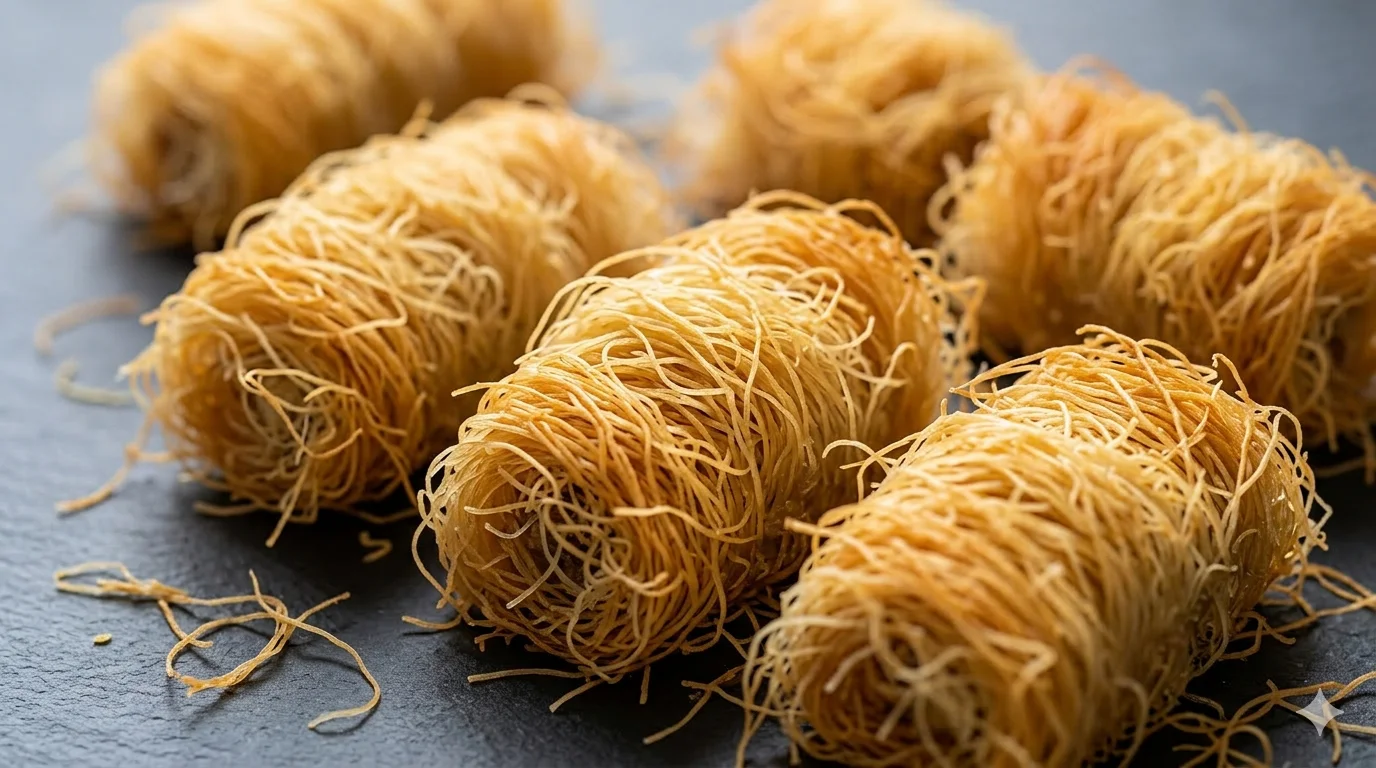
- Toast the kataifi. Rough-chop the kataifi into 3–4cm lengths — it shouldn't be too fine or it'll clump. Melt butter in a wide, heavy-bottomed pan over medium heat. Add the kataifi and cook, tossing constantly with tongs or a spatula, for 8–12 minutes until uniformly deep golden and crisp. It should smell nutty, not burnt. 💡 Keep stirring — kataifi burns fast. Golden = perfect. Dark brown = too far.
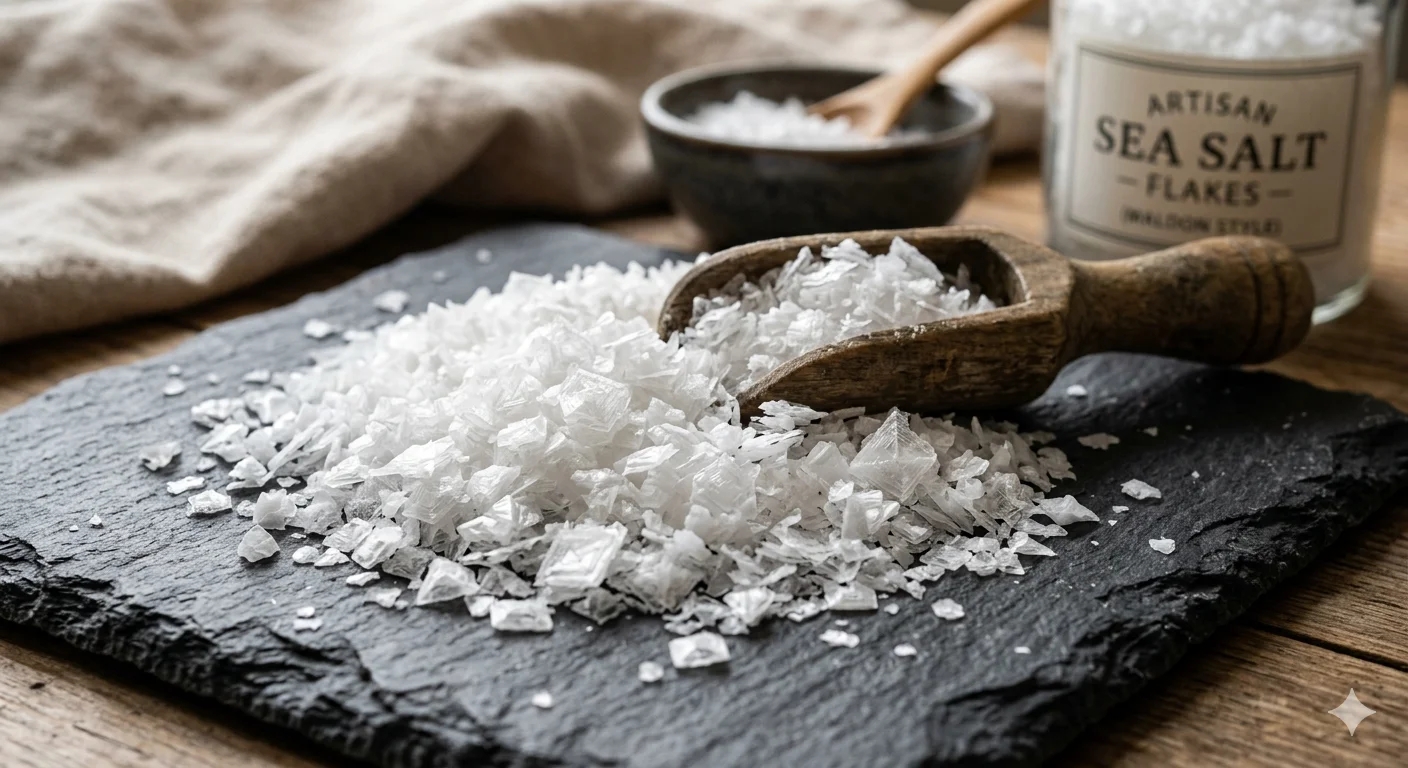
- Make the filling. Remove the pan from heat. Immediately stir in the pistachio cream and tahini (if using). The residual heat will meld everything together. Add a generous pinch of sea salt. Mix well until the kataifi is evenly coated and no dry threads remain. Allow to cool for 8–10 minutes — it should be thick and spreadable, not runny.
- Fill the bars. Remove the chocolate shells from the fridge. Spoon the kataifi filling into each shell, pressing it gently and evenly with the back of a spoon. Leave a 3mm border around the edge so the top seal bonds cleanly. Do not overfill — the filling should sit just below the rim.
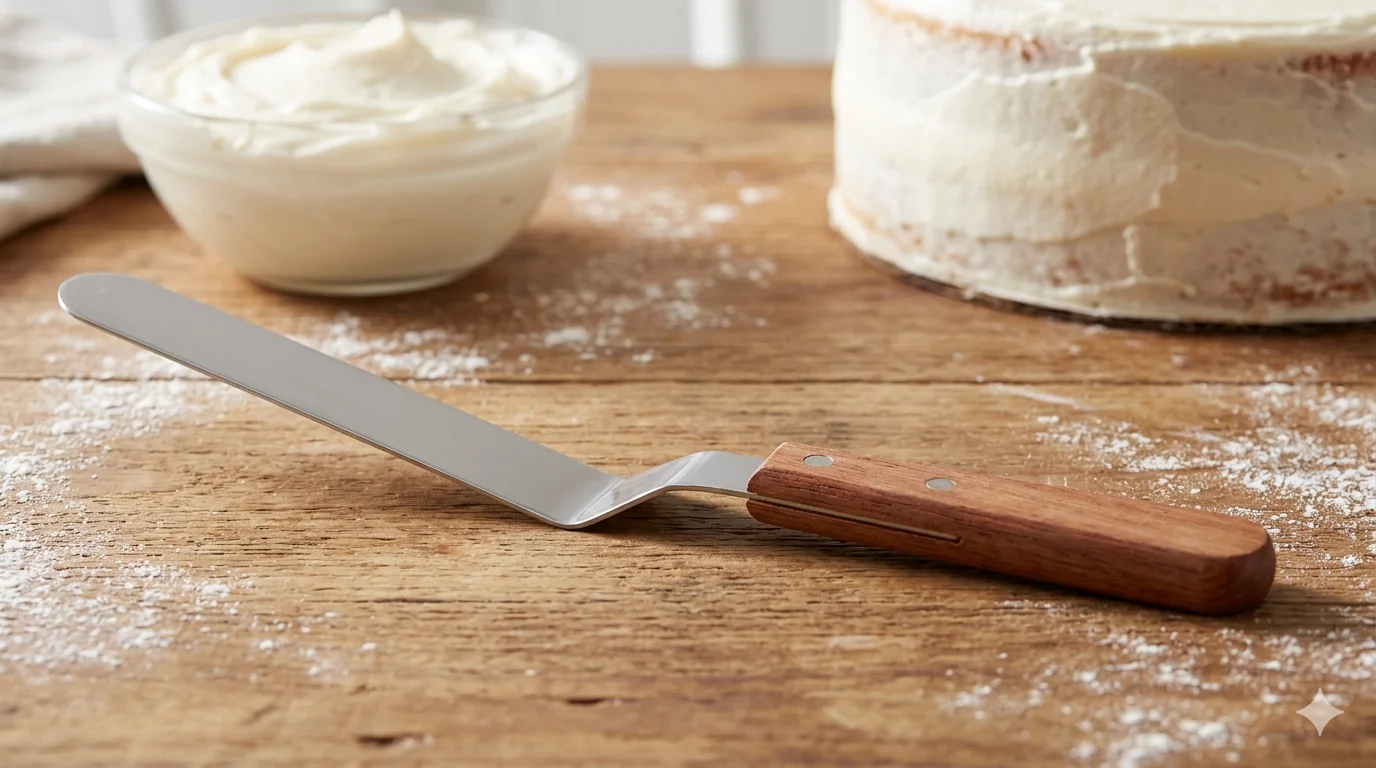
- Seal with chocolate. Reheat the remaining chocolate briefly if it has started to set (microwave 15 seconds). Pour or spoon over the filling to seal completely. Use an offset spatula or the back of a spoon to level the surface. Tap once more to remove bubbles and ensure a flat bottom.
- Chill. Refrigerate for a minimum of 2 hours. Overnight is ideal — the filling firms up beautifully and the flavors meld. Do not freeze, as condensation on thawing can cause sugar bloom.
- Unmold and finish. Invert the mold and gently flex to release. If using a tray, lift out using parchment and use a sharp knife to cut into bars or shards. Optionally dust with cocoa powder or crushed pistachios, or press gold leaf onto the surface while the chocolate is still cool. 💡 Run the knife under hot water and dry before each cut for clean edges.
Bars keep for up to 2 weeks in an airtight container in the fridge. Layer between sheets of parchment to prevent sticking. Best eaten within the first 3 days for maximum crunch in the kataifi filling.
The toasted kataifi filling can be made up to 3 days in advance and stored in an airtight jar at room temperature. Melt and mold the chocolate shells on the day you want to assemble for the freshest result.
White Chocolate & Rose Water · Milk Chocolate & Cardamom · Dark & Sea-Salt Caramel · Ruby Chocolate & Raspberry. Swirl halva or speculoos spread under the kataifi layer for extra depth.
As an Amazon Associate, Royale Dubai Chocolate earns from qualifying purchases.
Pro Tips
Temper for the Perfect Snap
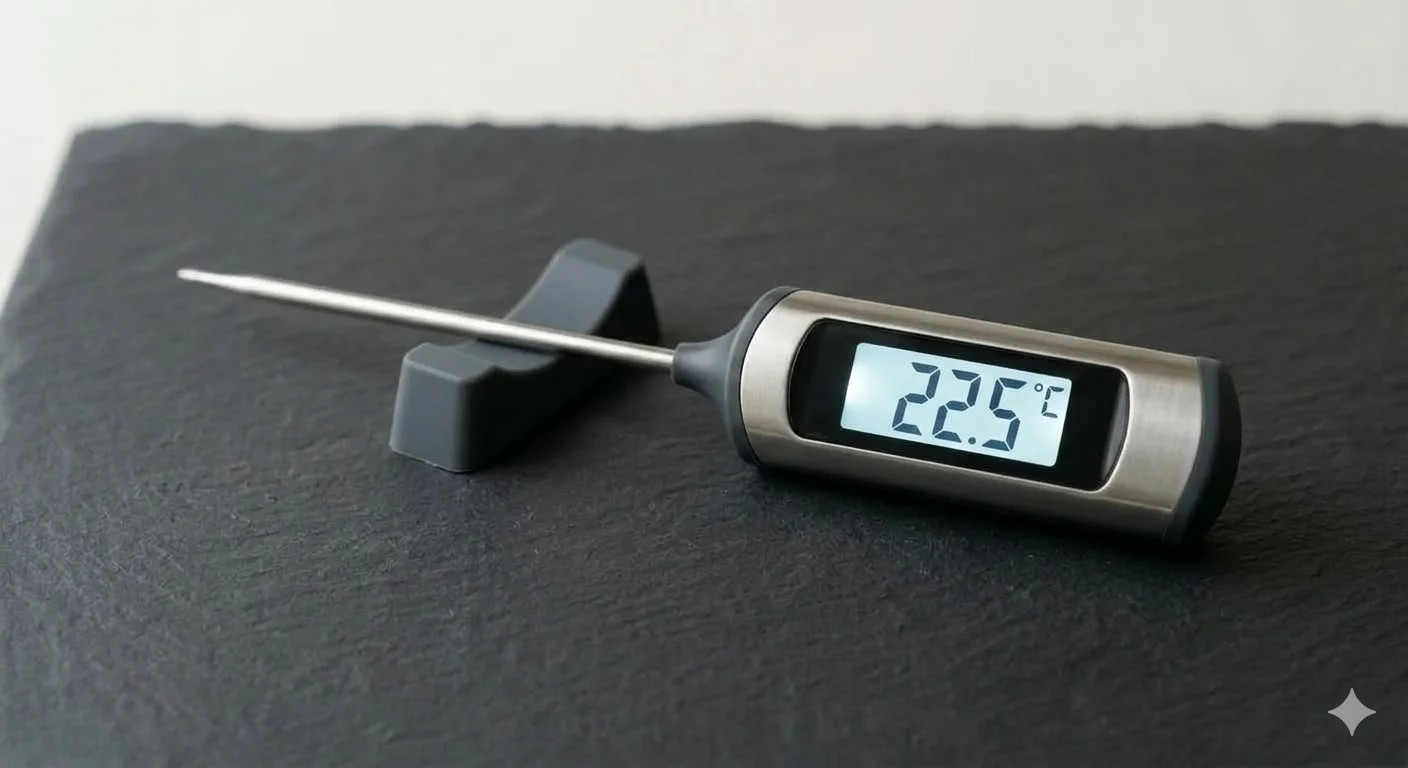
For a glossy, professional finish, temper your chocolate before molding. Melt to 50°C, cool to 27°C on a cold surface (or by adding seed chocolate), then warm back to 31–32°C (dark) or 29–30°C (milk). A digital thermometer is essential. Tempered chocolate sets with a brilliant shine and sharp snap.
Toast the Kataifi Properly
Never skip toasting — raw kataifi turns limp and soggy within hours. You need a deep, nutty golden color throughout (not just on the outside). Use a wide pan so strands spread out and toast evenly. Stir constantly: kataifi goes from golden to burnt in under 30 seconds if left unattended.
Pistachio Paste vs. Cream
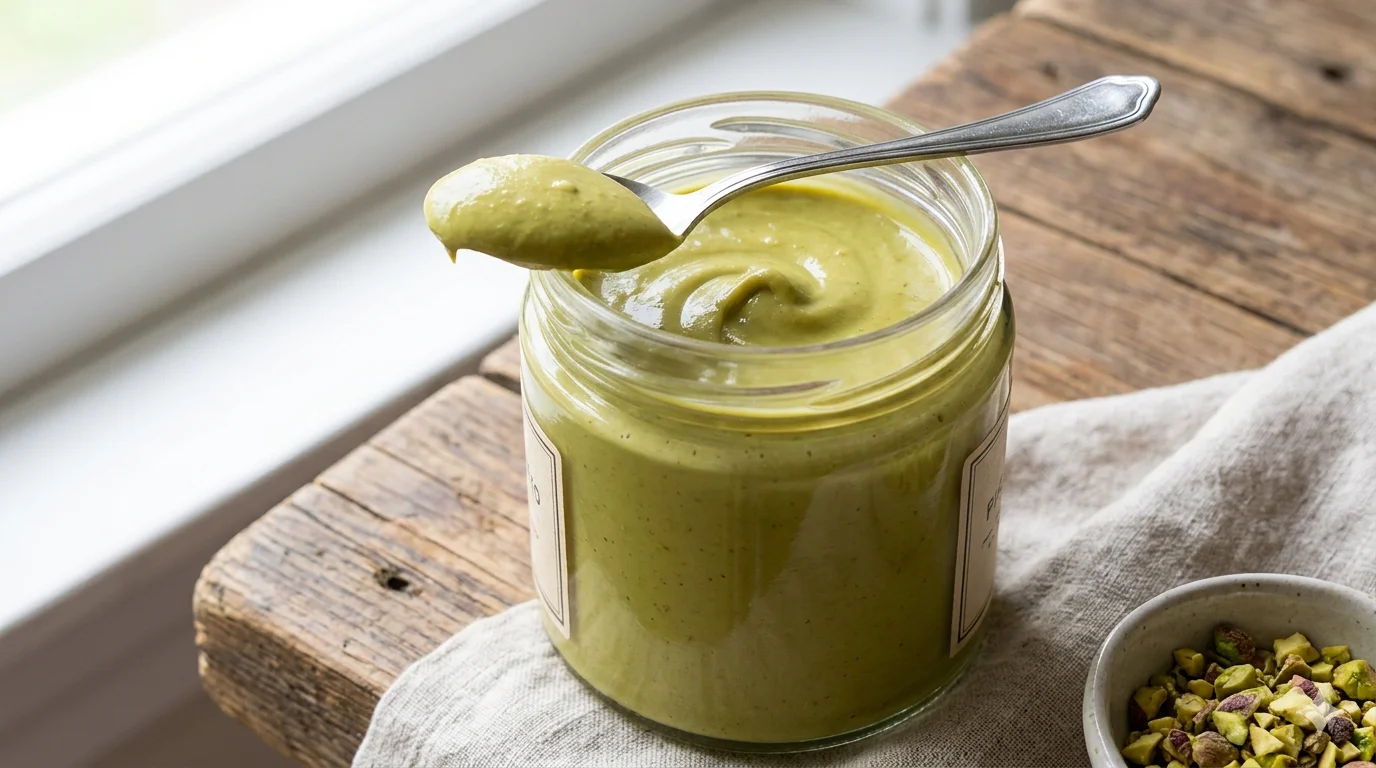
100% pistachio paste is intense and may be gritty — blend with a little neutral oil. Commercial pistachio creams (Sicilian-style or Biscoff-style) are sweeter and smoother. For best results, use 60% paste + 40% cream: you get the flavor intensity of the paste with the spreadable texture of the cream.
Equipment You'll Need
Silicone bar molds (or a lined tray) · Digital thermometer (for tempering) · Double boiler or heatproof bowl · Wide heavy pan · Offset spatula · Sharp chef's knife · Parchment paper.
Variations to Try
White Chocolate & Rose Water · Milk Chocolate & Cardamom · Dark & Sea-Salt Caramel · Ruby Chocolate & Raspberry. You can also swirl a layer of halva or speculos spread under the kataifi filling for extra complexity.
All Recipes
Tips & Techniques
Choosing Your Chocolate
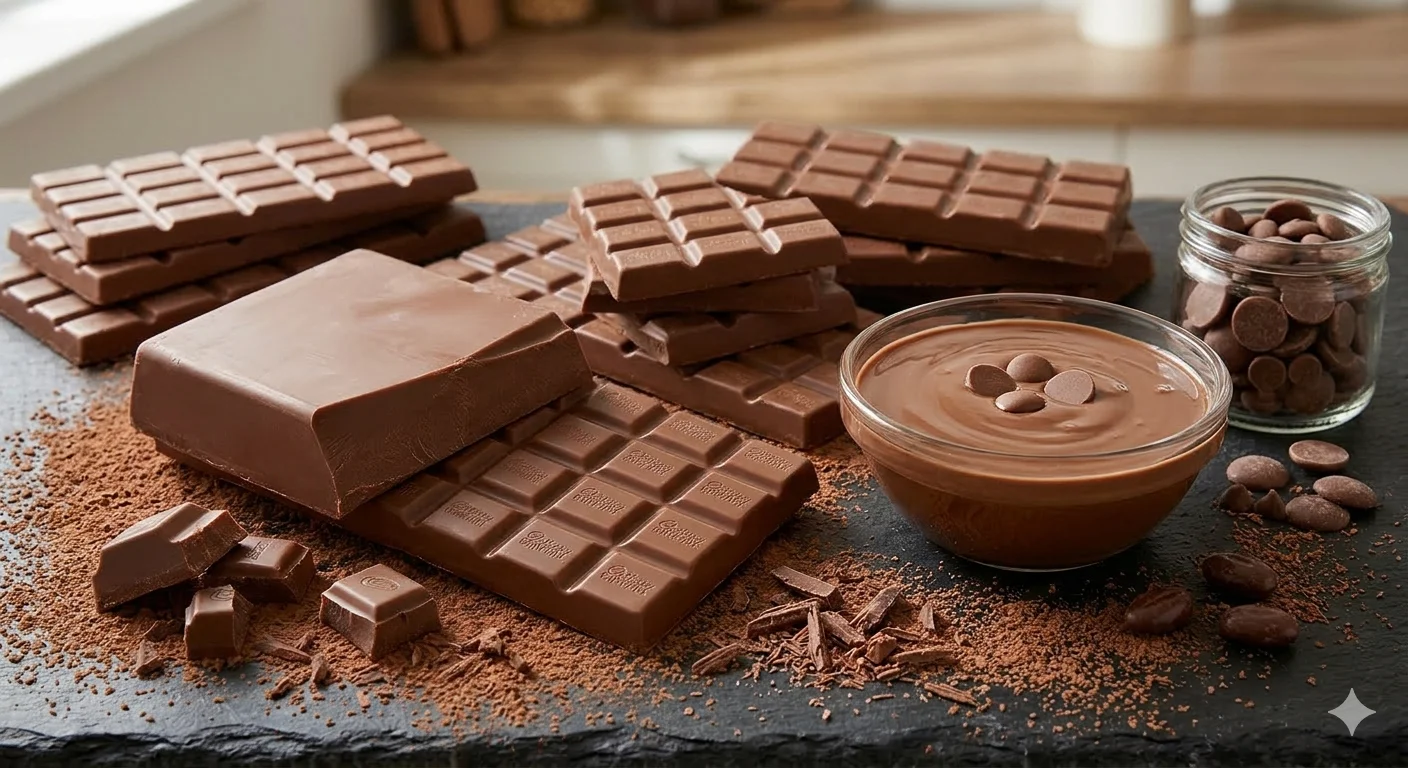
Always use couverture chocolate (min. 32% cocoa butter) — not compound chocolate, which contains palm oil and won't temper. Look for Callebaut, Valrhona, or Lindt Excellence. For the bar's signature balance, use a 70:30 ratio of dark to milk chocolate.
Working with Kataifi
Keep unused kataifi covered with a damp cloth while you work — it dries out in minutes and becomes brittle. Freeze leftovers in a sealed zip-lock bag for up to 3 months. It toasts perfectly straight from frozen; add 2 extra minutes to the cooking time.
Tempering Without a Thermometer
Use the touch test: correctly tempered chocolate at working temperature feels just slightly cool — not cold, not warm — against the inside of your lower lip. Or use the seed method: melt ⅔ of your chocolate fully, remove from heat, stir in the remaining ⅓ (finely chopped) until melted.
Homemade Pistachio Cream
Blend 200g raw shelled pistachios + 3 tbsp neutral oil + 3 tbsp icing sugar + pinch of salt in a high-speed food processor. Blend 10–12 minutes (scraping down regularly) until completely smooth and pourable. Store refrigerated up to 3 weeks. Yields ~180g.
Flavor Pairings
Cardamom · Rose water · Orange zest · Saffron · Vanilla bean paste · Halva · Tahini · Dried rose petals · Crushed pistachios · Pomegranate · Speculos / Biscoff · Salted caramel · Mastic. Even a pinch of cayenne in the filling is extraordinary.
Storage & Gifting
Bars keep up to 2 weeks refrigerated, or 3 months frozen. For gifts: wrap individually in gold foil, place in a box lined with tissue paper. Allow to sit at room temperature for 5–8 minutes before eating for the best snap-and-give texture.
Ingredient Glossary
- Kataifi / Kadaif Pastry
- Shredded phyllo (filo) dough that resembles very fine vermicelli noodles. Sold fresh or frozen at Middle Eastern, Greek, Turkish, and specialty grocery stores — and widely online. When toasted in butter, it creates a uniquely light, feathery crunch that no other ingredient replicates. Also labeled "shredded wheat pastry" or "angel hair pastry" in some regions.
- Pistachio Cream / Paste
- Pistachio paste is 100% ground pistachios — intensely flavored, slightly gritty, often unsweetened. Pistachio cream is a sweetened, smoother commercial spread (think peanut butter consistency). Italian brands are easiest to find; look for a product with pistachios as the first ingredient, not sugar. Mixing both 50/50 gives ideal flavor and texture.
- Tahini
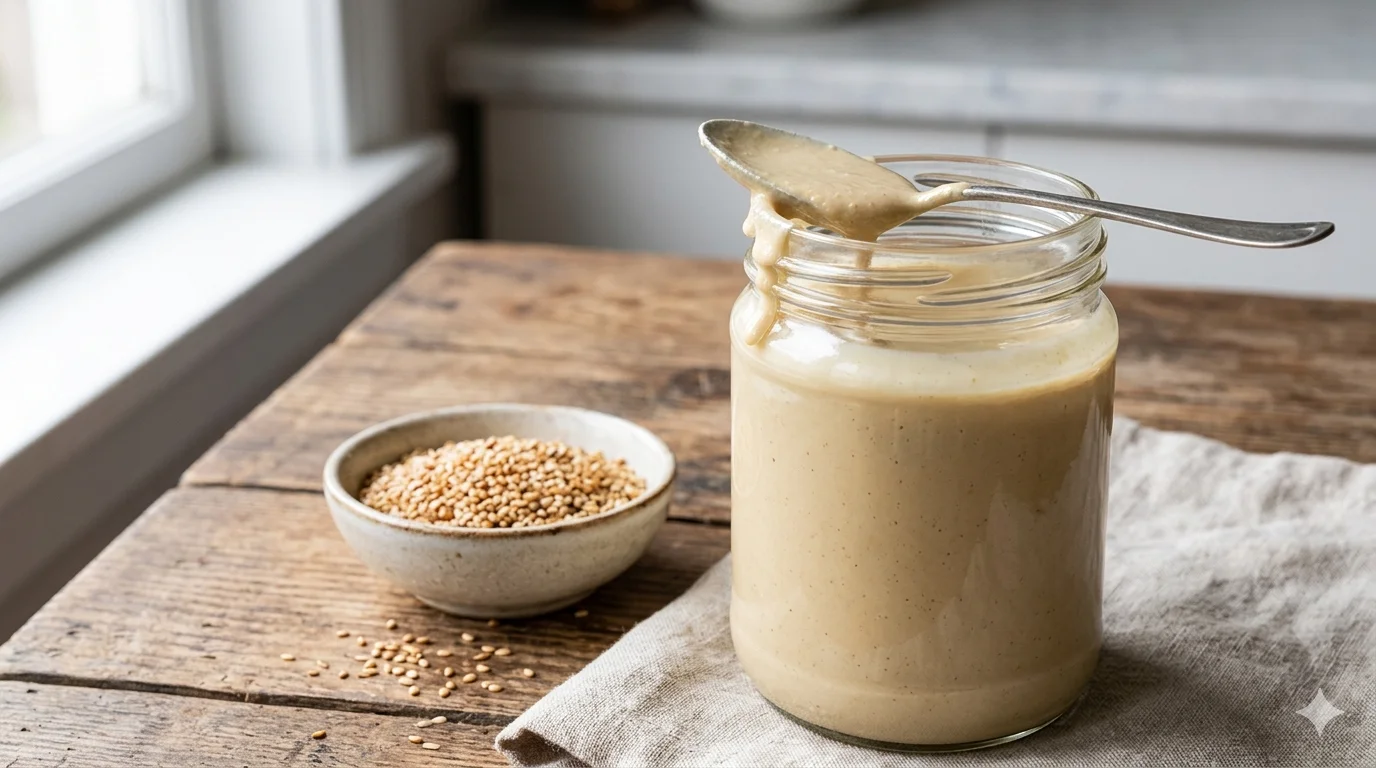
- Ground sesame seed paste. Use raw (light) tahini — not toasted (darker) — for the subtlest flavor. In the Dubai chocolate filling, it adds a savory, nutty depth that you can't quite identify but would miss if absent. A little goes a long way: 1–2 tablespoons per batch is enough.
- Couverture Chocolate
- Professional-grade chocolate defined by its higher cocoa butter content (minimum 32%). It flows better when melted (lower viscosity), tempers predictably, and produces a glossier, snappier finished product than standard eating chocolate. Callebaut, Valrhona, and Cacao Barry are the industry standards. Many specialty grocery stores and Amazon stock them.
- Tempering
- The controlled process of melting, cooling, and re-warming chocolate to specific temperatures that encourage the formation of stable cocoa-butter crystals (Form V). Properly tempered chocolate sets glossy, snaps cleanly, contracts away from molds for easy release, and melts smoothly in the mouth. Untempered chocolate is perfectly edible but tends to look dull, feel soft, or have a waxy mouthfeel.
- Bloom (Fat & Sugar)
- Fat bloom appears as white/grey streaks or a matte, dusty surface. It's caused by unstable cocoa butter crystals (poor tempering) or temperature fluctuations during storage. Sugar bloom looks grainier/speckled and is caused by surface condensation dissolving and recrystallising sugar. Both are cosmetic issues only — the chocolate is completely safe and still delicious to eat.
- Double Boiler (Bain-Marie)
- A heatproof bowl placed over a pot of barely simmering water, where the steam gently melts the chocolate without direct heat. The bowl must not touch the water. This method gives the most control and prevents overheating or scorching. Even a single drop of water in the bowl can cause chocolate to "seize" into a stiff, grainy mass — keep everything completely dry.