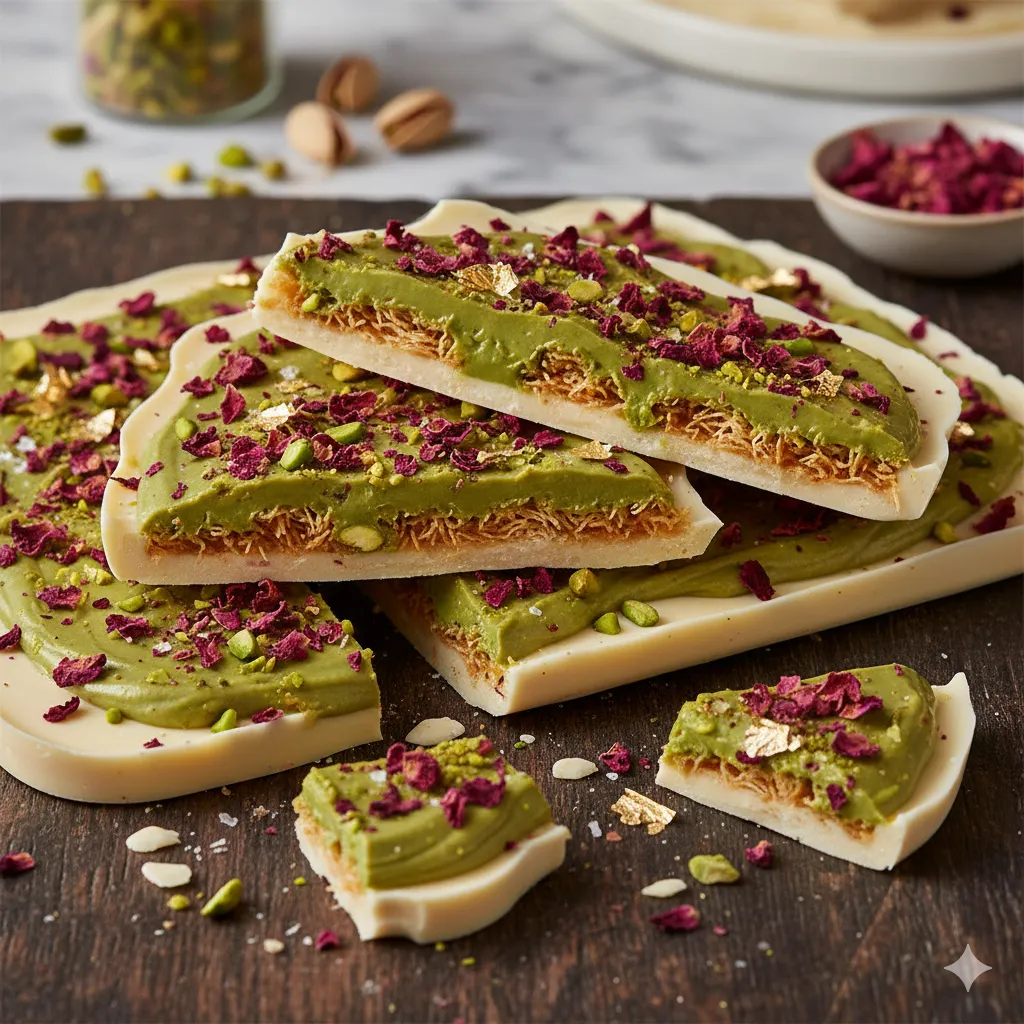
White Chocolate Rose & Pistachio Slab
An ivory slab of creamy white chocolate layered with rose-scented kataifi and pistachio cream, scattered with dried rose petals and gold.
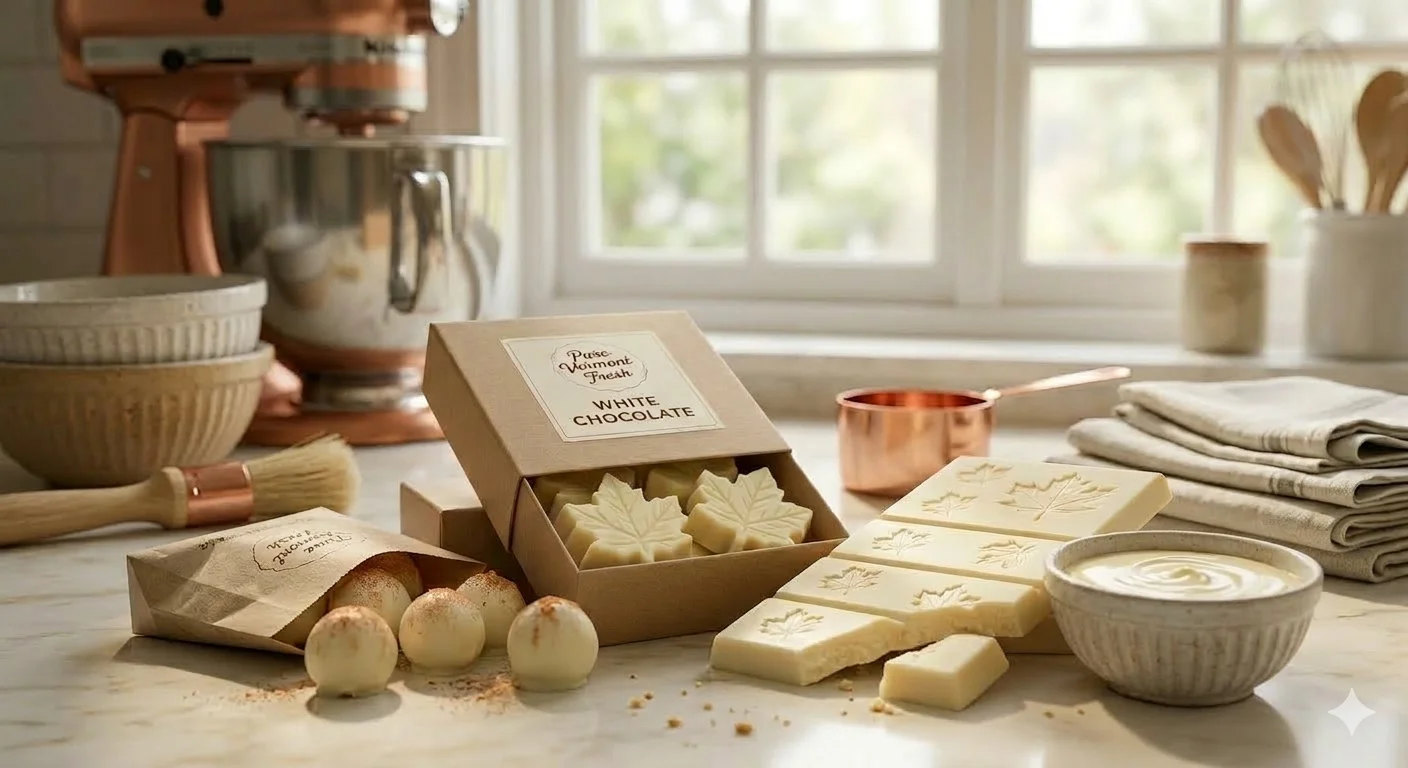
- White chocolate (good quality), chopped500g
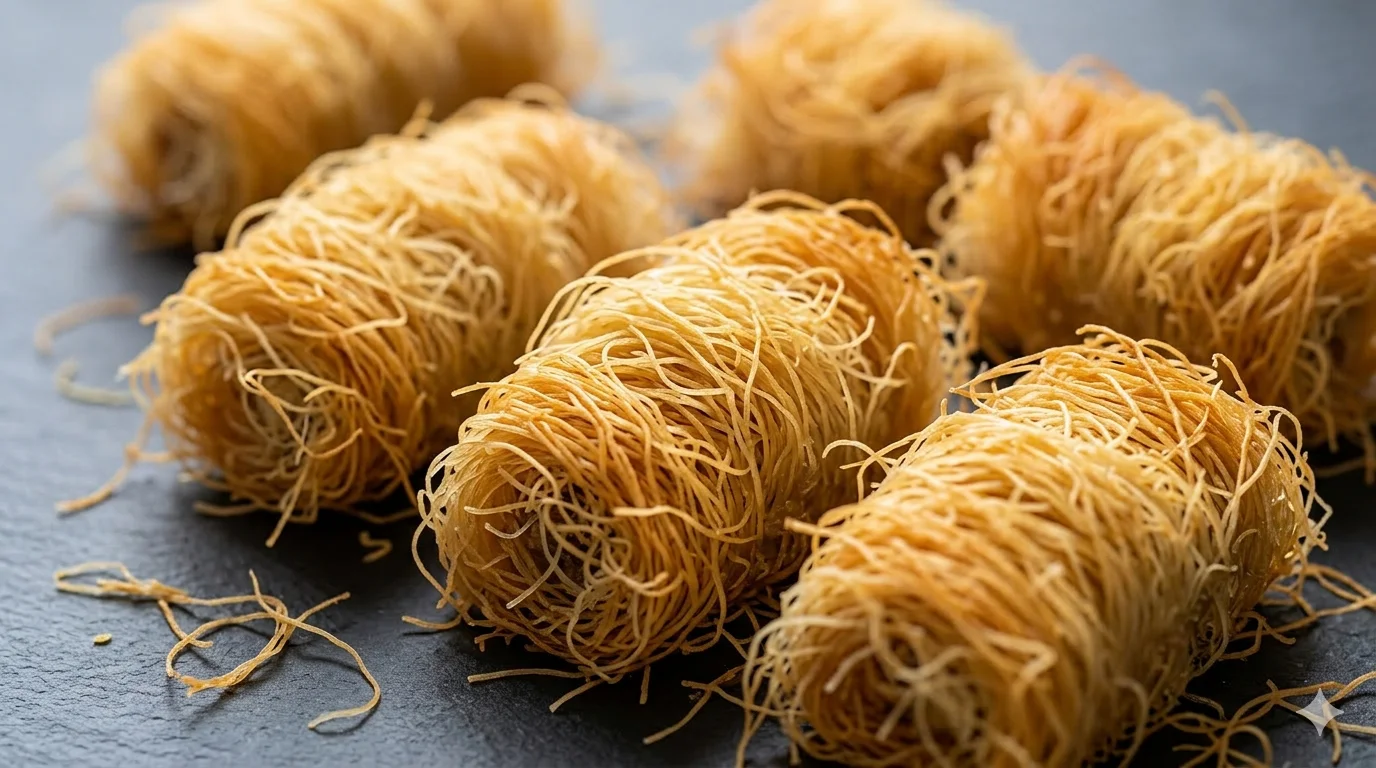
- Kataifi pastry120g
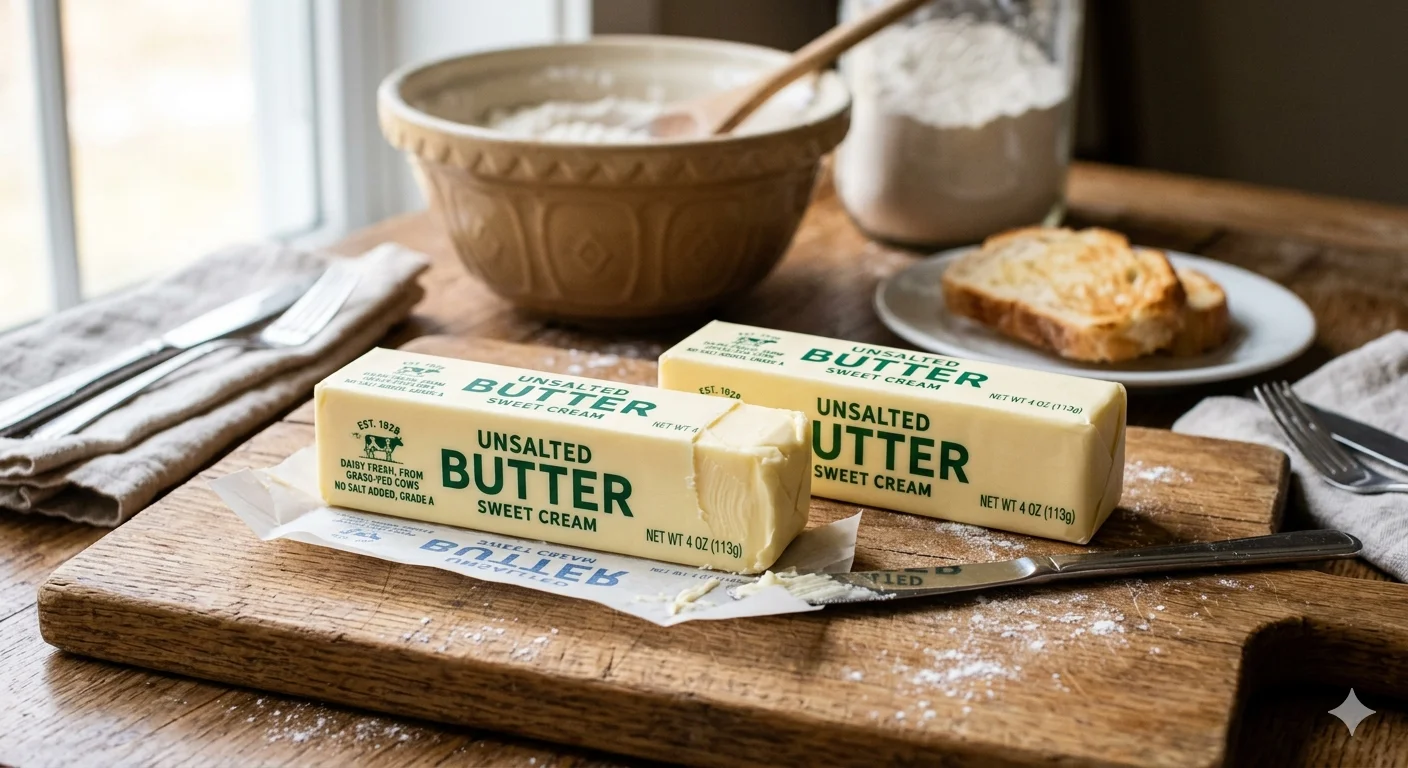
- Unsalted butter20g
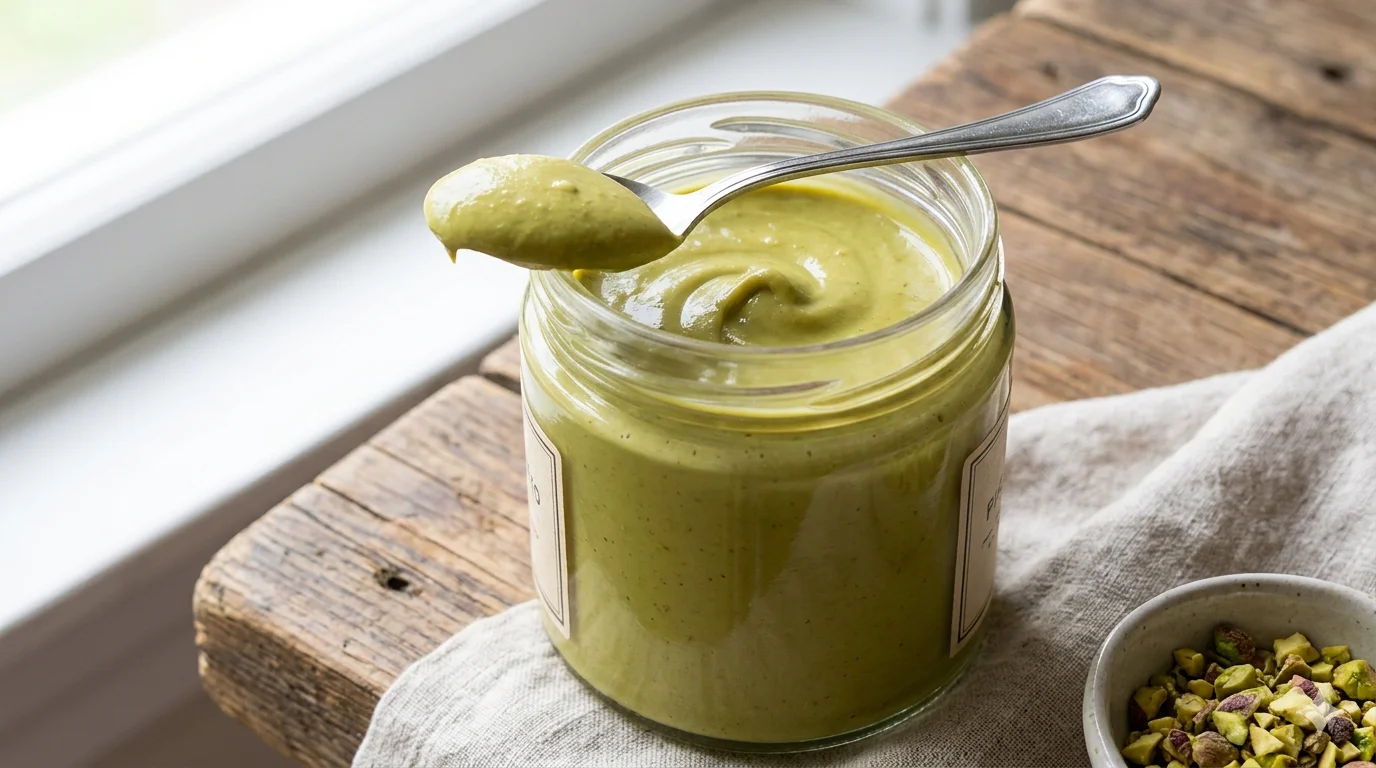
- Pistachio cream160g
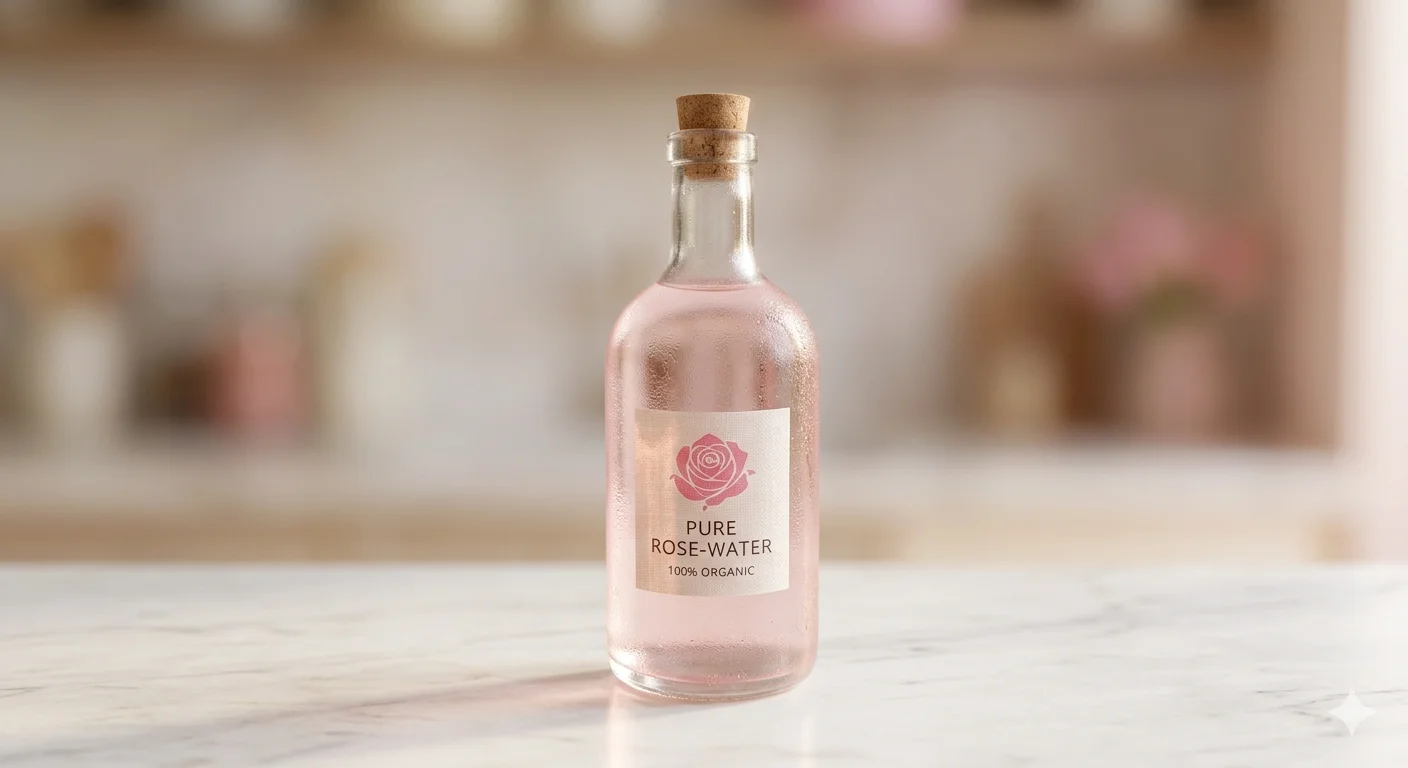
- Rose water½ tsp
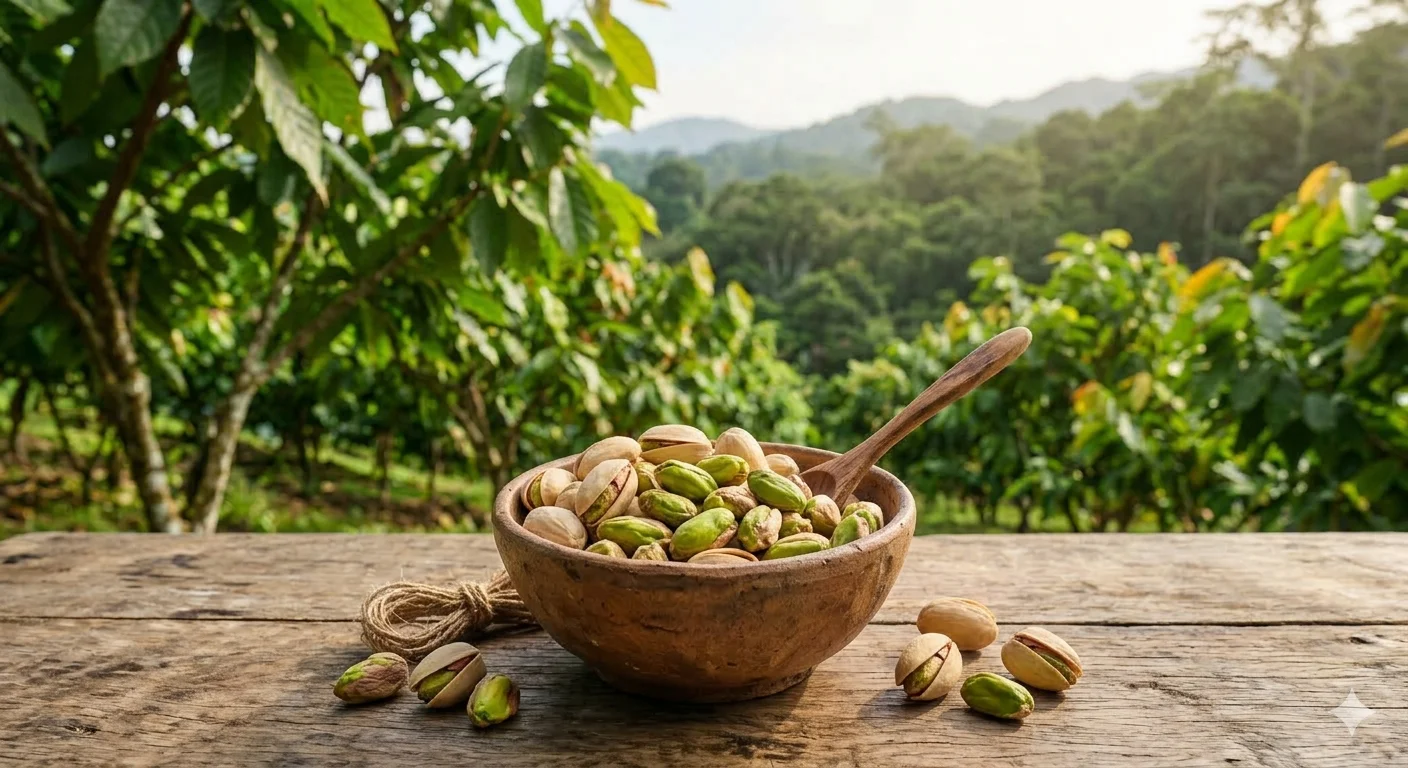
- Crushed raw pistachios50g
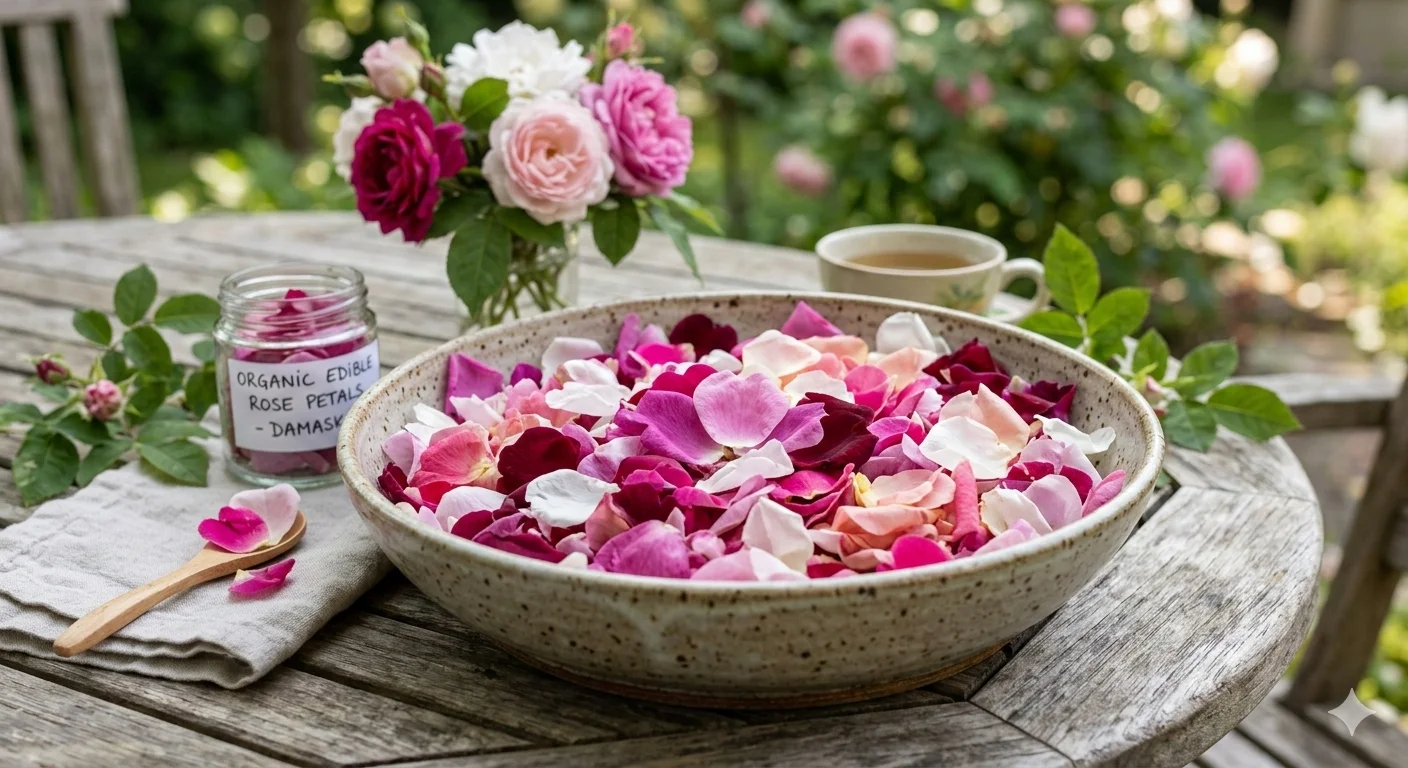
- Dried edible rose petals1 tbsp
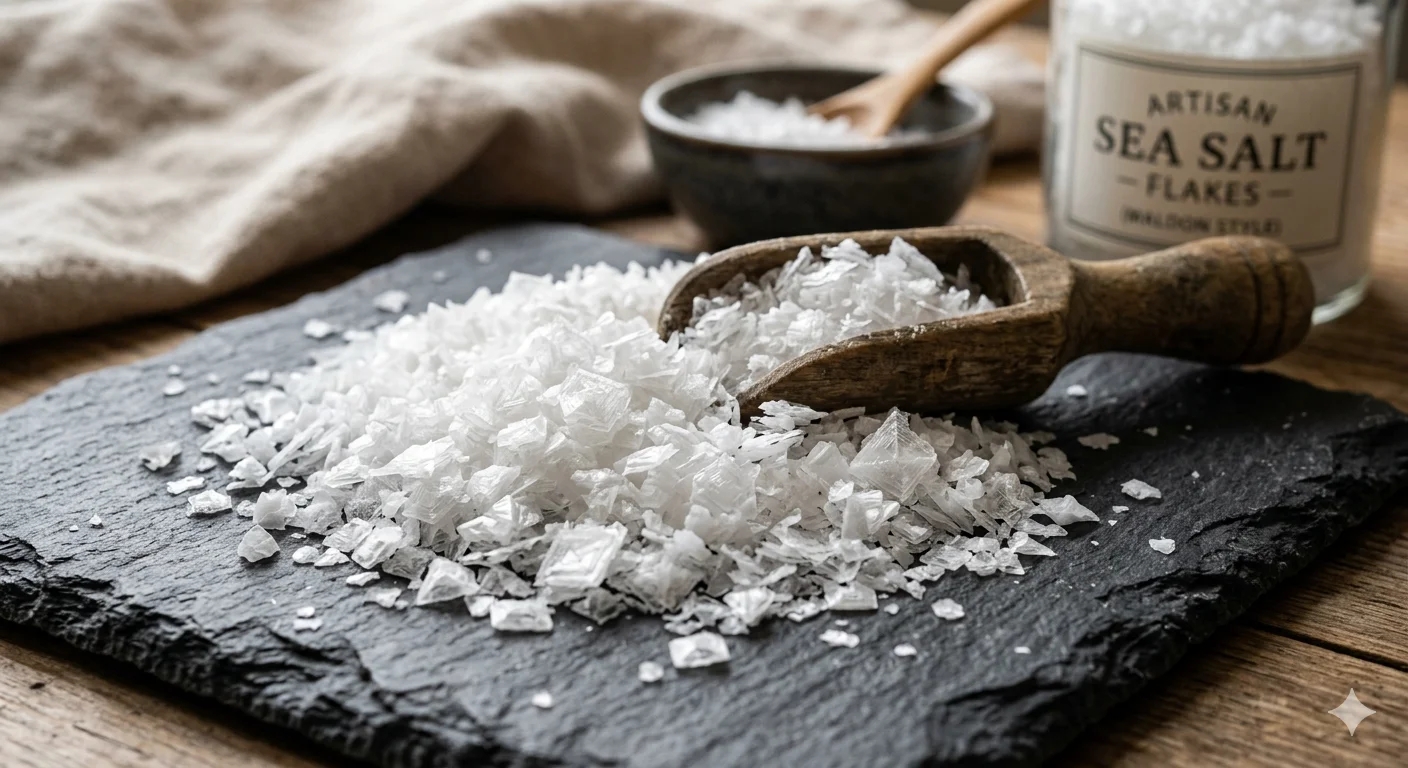
- Sea salt flakespinch
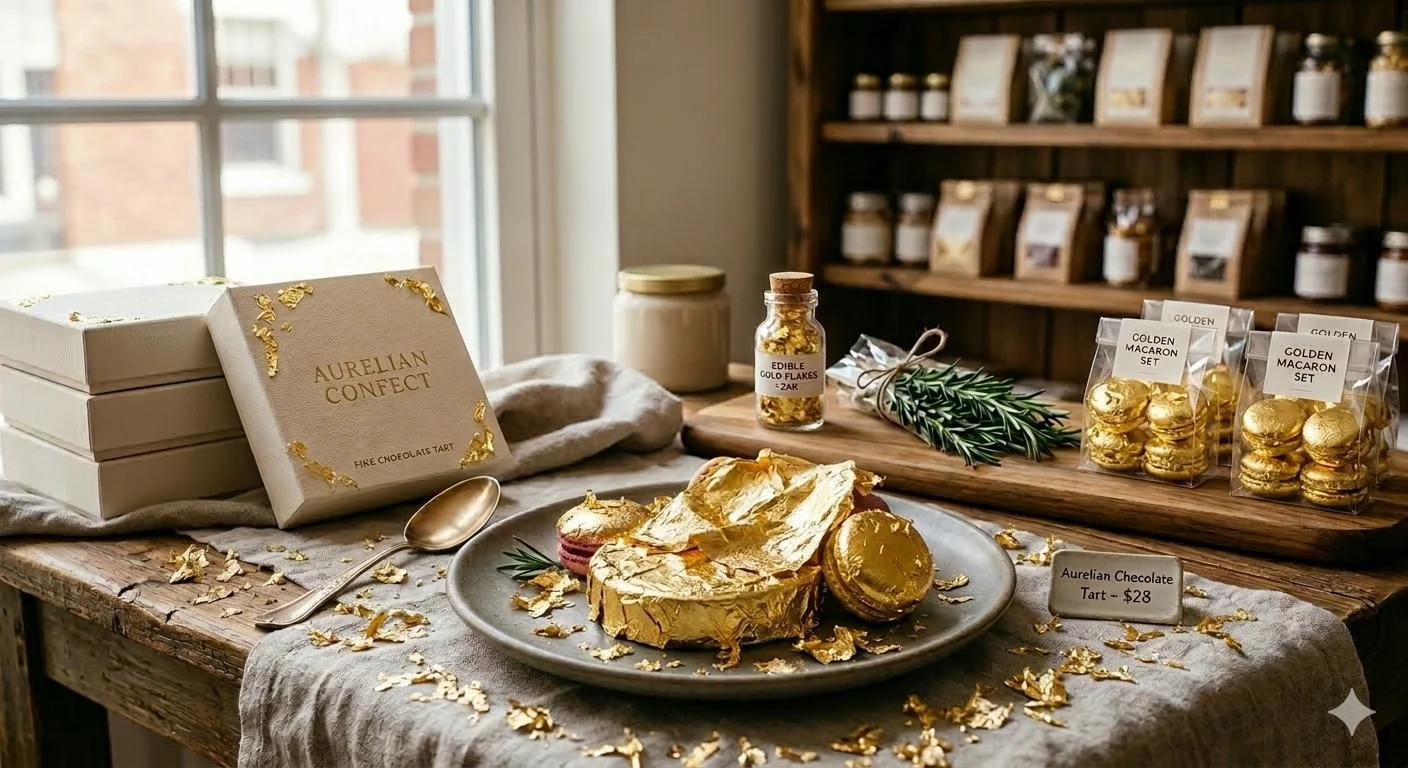
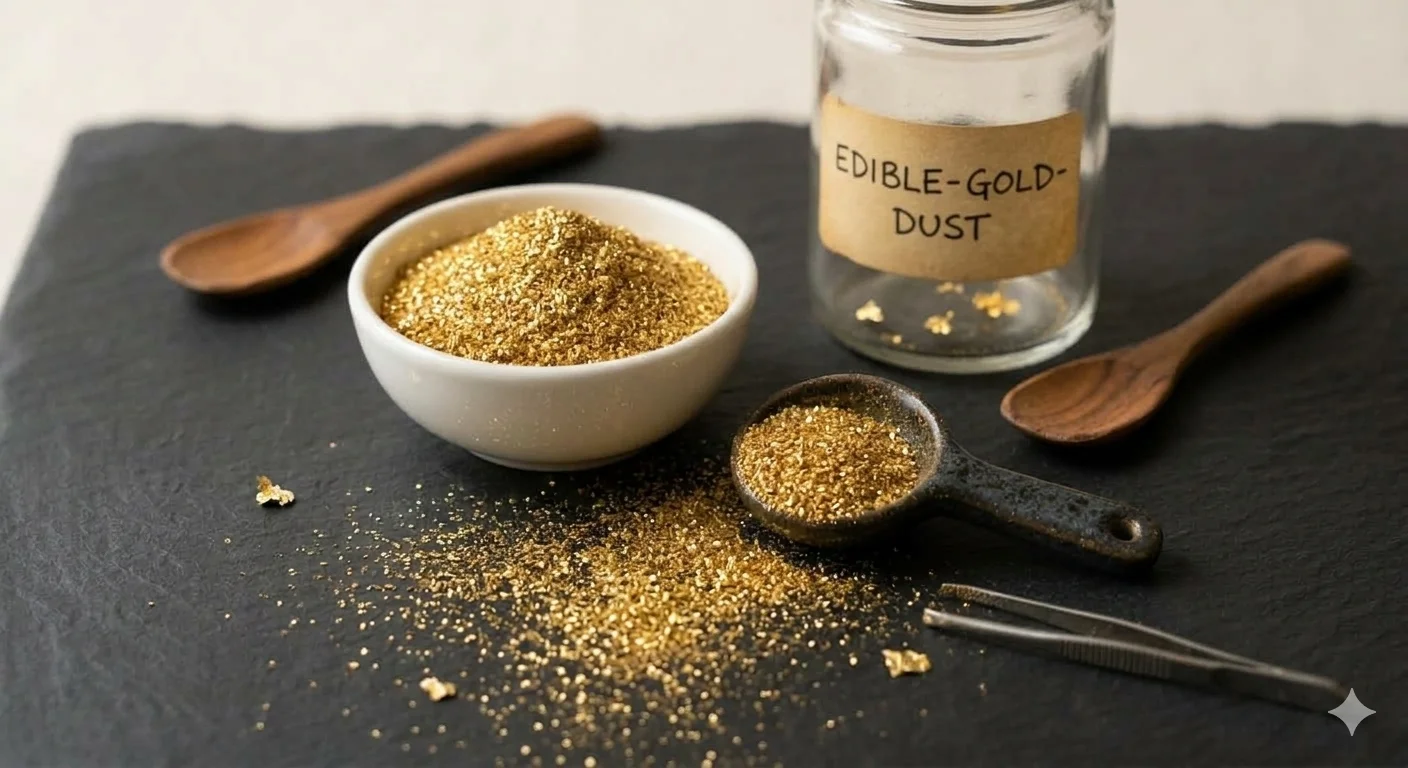
- Edible gold leaf or gold dustoptional
- Line a 30×20cm baking tray with parchment, leaving an overhang on the sides.
- Melt white chocolate in a double boiler or microwave (30-second bursts), stirring until completely smooth. White chocolate is more sensitive to heat than dark — keep temperatures low and stir frequently.
- Toast kataifi in butter over medium heat, stirring constantly, for 6–8 minutes until golden and fragrant. Transfer to a plate and allow to cool completely.
- Stir rose water into the pistachio cream. Taste — it should be floral but not perfumy. Add more in drops if desired.
- Pour the melted white chocolate onto the lined tray and spread to an even 5mm layer. Tap to level. Refrigerate for 8 minutes until just set but still slightly tacky on top.
- Drop spoonfuls of the rose pistachio cream across the surface. Swirl lightly with a skewer for a marbled effect.
- Scatter toasted kataifi, crushed pistachios, rose petals, sea salt, and gold leaf over the top. Press very lightly.
- Refrigerate for 2 hours until fully set. Break into shards. Store in an airtight container in the fridge for up to 10 days.
White chocolate is sweeter than dark — a generous pinch of sea salt on top cuts through beautifully and is non-negotiable. Use a quality white chocolate (Callebaut or Valrhona) — cheap white chocolate contains very little cocoa butter and won't set or taste as good.
Replace rose water with orange blossom water. Add a layer of lemon curd under the pistachio cream. Use freeze-dried raspberry powder instead of rose petals for a pink version.
As an Amazon Associate, Royale Dubai Chocolate earns from qualifying purchases.
About This Recipe
The White Rose Slab is a luminous, feminine counterpoint to the darker Dubai chocolate recipes — a 500g sheet of premium white chocolate perfumed with rose water and cardamom, layered over a pistachio-kataifi filling and decorated with dried rose petals, crushed pistachios, and a whisper of edible gold. It's the Dubai chocolate aesthetic translated into its most romantic expression, and it makes a genuinely breathtaking gift: wrapped in cellophane and tied with ribbon, this slab looks like it came from a luxury confectioner in Dubai Mall itself.
White chocolate presents different challenges to dark: it's sweeter, more temperature-sensitive, and lacks the natural bitterness that dark chocolate uses to balance sweet fillings. The rose water and cardamom in this recipe solve that balance problem beautifully — the floral note cuts through the sweetness of the white chocolate, while the cardamom adds a warm, slightly spicy edge that prevents the slab from being cloying. Sea salt flakes on top are also non-negotiable: their mineral sharpness creates the contrast that makes every other flavor more vivid.
Tips & Technique
- White chocolate burns far more easily than dark — use a double boiler with water that is barely steaming (not boiling), and stir frequently. Even brief overheating turns white chocolate grainy and unusable. Remove from heat while there are still small unmelted pieces and stir off-heat to finish.
- Add rose water to the filling (kataifi mixture), not directly to the melted white chocolate. Rose water is water-based and will cause melted chocolate to seize immediately. The filling is not pure chocolate, so the small amount of rose water distributes safely.
- Add the toppings in a specific order: kataifi first (press lightly), then pistachios, then rose petals (they're delicate), then sea salt, then gold leaf last. This layering order keeps the delicate elements visible on top.
- Work quickly once the white chocolate is poured onto the tray — it sets faster than dark chocolate at room temperature. Have all toppings measured and within arm's reach before pouring.
- Use a good-quality white chocolate with real cocoa butter, not a compound coating. Quality white chocolate (Callebaut, Valrhona, Green & Black's) sets with a proper snap; compound coating stays waxy and doesn't develop the same flavor.
Ingredient Notes
- White chocolate: Use only real white chocolate containing cocoa butter as the fat — check the ingredients list. Valrhona Ivoire (35%), Callebaut W2, or Green & Black's white chocolate are all excellent. Cheap "white chocolate" often uses vegetable fats instead of cocoa butter and produces a waxy, artificially flavored slab that doesn't snap cleanly.
- Rose water: Quality and concentration vary enormously between brands. Middle Eastern brands (Cortas, Al Wadi) are often twice as concentrated as supermarket varieties. Taste before using — add the full amount to the filling, taste, and add more only if you want a stronger rose note. Over-rosewatererd chocolate tastes like soap.
- Cardamom: Green cardamom pods ground fresh give a brighter, more complex flavor than pre-ground powder. For white chocolate, use a restrained amount (¼–½ tsp) — the spice pairs differently with white's sweetness than with dark, and can become overwhelming more quickly.
- Edible dried rose petals: Food-grade, unsprayed petals are essential — pesticide residues on decorative (non-food) rose petals make them unsafe to consume. Look for "culinary grade" or "food safe" on the packaging. Iranian damask rose petals have the best color and aroma.
Serving & Storage
Break the slab into irregular shards for serving — no two pieces should be the same shape. Arrange on a board or in a shallow bowl for a dessert spread, or layer in a flat box for gifting. White chocolate is more sensitive to heat than dark — store in a cool place (below 18°C) rather than at room temperature in warm weather, and refrigerate in summer. The slab keeps for up to 3 weeks in an airtight container at cool room temperature, or up to 6 weeks refrigerated. The dried rose petals on top retain their color and texture for about 5 days before beginning to fade; make the slab close to when you plan to gift or serve it for the most vibrant appearance.
Frequently Asked Questions
Why did my white chocolate turn lumpy and grainy when I melted it?
White chocolate has seized — this happens when water gets into the melted chocolate (even a drop from condensation on the bowl) or when it's overheated above about 44°C. To recover seized chocolate, add warm cream in tiny increments (1 tsp at a time) while stirring vigorously — you can sometimes bring it back to smooth. Prevention: ensure all equipment is completely dry and use a thermometer to keep the temperature below 40°C during melting.
Can I swap rose water for orange blossom water?
Absolutely — orange blossom water creates a fragrant, citrusy alternative that pairs beautifully with white chocolate and pistachio. Use the same quantity as specified for rose water. Orange blossom water tends to be slightly less perfumed than rose water, so you may want to increase the amount by ¼ tsp. The finished slab has a lighter, more citrusy floral character that's equally popular.
My slab has white streaks after setting — is it ruined?
No — the white streaks are "bloom," caused by the chocolate setting too quickly (temperature shock) or uneven cooling. The slab is completely safe to eat and the flavor is unaffected. To prevent bloom next time, let the chocolate set slowly at cool room temperature for the first 30 minutes before refrigerating. Tempered white chocolate is less prone to bloom, but full tempering is not required for this recipe.
How do I stop the rose petals from sinking into the chocolate?
Add the rose petals after all the heavier toppings (kataifi, pistachios, salt) have been pressed on. The heavier pieces create a slightly textured surface that the petals can rest on rather than sinking through. Also ensure the petals are completely dry and at room temperature — cold or damp petals sink more readily into warm chocolate. Lay them flat rather than pressing them in, and they'll sit on the surface as the chocolate sets.